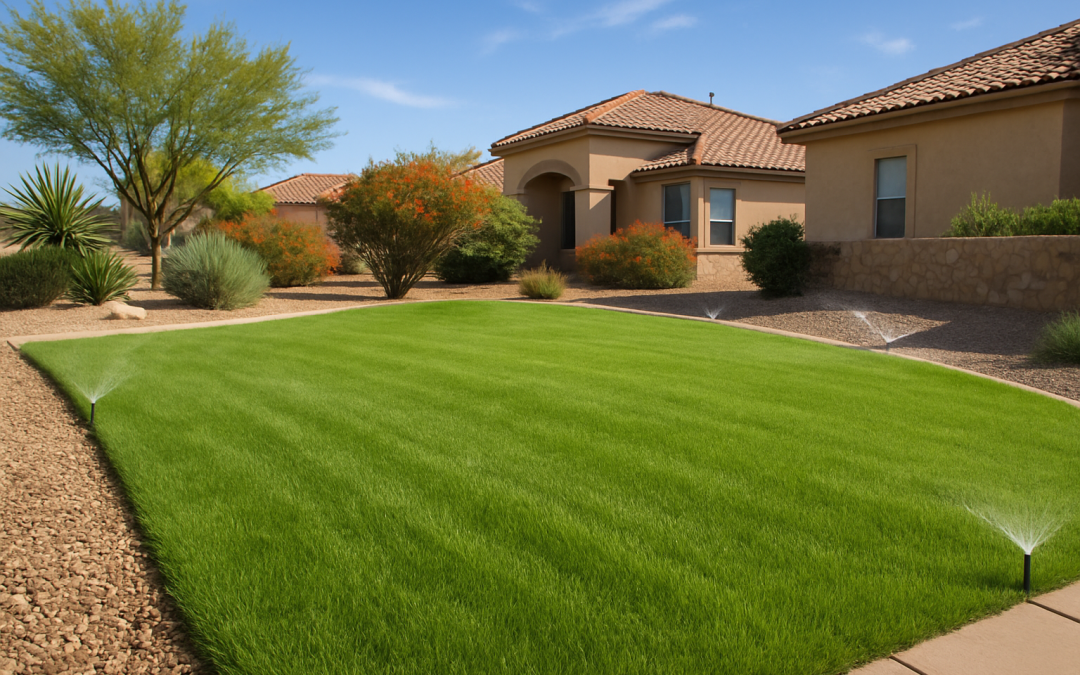
As summer loosens its grip on El Paso and evening temperatures finally start to dip, your lawn enters one of the most important transition windows of the year. The soil is still warm from months of intense sun, but cooler nights signal both an opportunity and a deadline. Whether you’re caring for established Bermuda, planning to overseed for winter color, or thinking about putting down fresh fescue sod, the next several weeks will shape how your yard looks all the way through spring.
Understanding the Fall Window in the High Desert
El Paso’s fall weather is a unique mix of lingering warmth and gradually cooling nights. Daytime highs typically remain in the upper 80s through much of early fall before settling into the 70s as the season deepens. Soil temperatures follow a similar slow curve downward, which is actually great news for lawn care. Warm soil encourages root establishment, while cooler air reduces the stress that summer heat puts on turf.
This pattern holds true across the broader region as well. Homeowners in Las Cruces, NM, and Santa Teresa, NM, experience a nearly identical fall climate, often within just a degree or two of El Paso’s readings. The same general timing and techniques apply throughout the Paso del Norte area, including communities like Horizon City, TX, and Anthony, TX, along the river valley to the south.
The key takeaway is that fall is not a time to coast. It’s a time to act — thoughtfully and with a plan.
Preparing Your Bermuda Lawn for the Transition
Bermuda is the workhorse warm-season grass across the El Paso metro. It thrives in full sun, handles heat and foot traffic well, and generally tolerates the alkaline soils common in the region. But as fall arrives, Bermuda begins its natural slow-down. Growth rates taper off, and the grass will eventually go dormant once nighttime temperatures consistently drop into the 40s and below.
Here’s what you should focus on to give your Bermuda the best possible send-off into dormancy:
Mow Low and Dethatch
In the weeks leading up to dormancy — or before an overseed — gradually lower your mowing height. Many homeowners find that bringing Bermuda down to about one inch works well for this pre-dormancy cut. Scalping the turf removes excess leaf blade and allows sunlight to reach the crown of the plant, which is especially important if you plan to overseed.
Dethatching goes hand-in-hand with this low mow. Over the course of summer, Bermuda can build up a layer of thatch — the matted layer of dead stems and roots sitting between the green blades and the soil surface. A light dethatching with a power rake or dethatcher opens up the canopy and improves seed-to-soil contact if you’re overseeding, or simply helps water and nutrients reach the root zone more efficiently heading into winter. If you maintained a good mowing height through the summer, you’re already ahead of the game.
Apply a Fall Fertilizer
A fall feeding with a balanced or slightly potassium-heavy fertilizer can help Bermuda store energy in its root system before it goes dormant. Potassium, in particular, is generally associated with improved cold tolerance and root strength. Avoid heavy nitrogen applications this late in the season — pushing top growth when the grass is winding down can leave it vulnerable to cold damage.
Adjust Your Watering Schedule
As temperatures cool, your Bermuda needs less water. Continuing a summer watering schedule into fall is one of the most common mistakes homeowners make. Overwatering in cooler weather can encourage fungal issues and waste a resource that’s always precious in the desert Southwest. Taper your irrigation gradually, paying attention to how quickly the soil dries between waterings.
Overseeding Bermuda for Winter Color
One of the most popular fall lawn projects in the El Paso area is overseeding dormant Bermuda with perennial ryegrass. Because Bermuda turns brown and goes dormant in winter, overseeding gives you a green lawn through the cooler months when the Bermuda is sleeping.
The timing on this matters quite a bit. You generally want to overseed when daytime highs are consistently in the mid-70s to low 80s and nighttime lows are dropping into the 50s. This sweet spot gives the ryegrass seed the warmth it needs to germinate while keeping conditions from being so hot that the seedlings struggle.
Before you spread seed, the prep work is critical. That low mow and dethatching we discussed earlier? Those steps are essential for a successful overseed. The seed needs direct contact with soil to germinate well. After broadcasting, a light topdressing of compost or soil can help keep seeds in place and retain moisture.
Keep the seeded area consistently moist — not soaked — for the first couple of weeks. This often means shorter, more frequent watering cycles rather than deep, infrequent soaks. Once the ryegrass is established and mowed a few times, you can back off to a more normal schedule.
If you’d prefer to skip the seeding process altogether, SodShop offers overseeded Bermuda sod that comes with the ryegrass already established — a convenient option that gives you instant green without waiting for germination.
Fall Sod: A Prime Planting Season
Fall is widely considered one of the best times to lay new sod in the high desert, and for good reason. The combination of warm soil and milder air temperatures creates ideal conditions for root establishment without the extreme heat stress of summer. This is true whether you’re starting a brand-new lawn, filling in bare patches, or renovating a tired yard.
Cool-Season Fescue in Fall
Tall fescue is a strong choice for El Paso lawns that get a mix of sun and shade, or for homeowners who want a lawn that stays green year-round without the hassle of overseeding. Fall is generally the best planting window for fescue sod because the grass actively grows in cooler weather and can put down deep roots before the heat of the following summer.
Siempre Verde Fescue is a variety well-suited to the region. It’s developed for the kinds of conditions found across the Southwest — alkaline soil, intense sun, and limited rainfall. Laying it in fall gives the roots months of favorable growing weather to get established before they face their first desert summer.
Warm-Season Bermuda in Fall
While spring and early summer are typically the peak planting times for Bermuda sod, early fall can still work if soil temperatures remain warm enough. The trade-off is that you have a shorter establishment window before the grass naturally slows its growth. If you’re considering Bermuda sod this time of year, it’s best to act early in the season rather than later.
SodShop carries both traditional Bermuda sod and TifTuf Bermuda, which is known for its improved drought tolerance — a meaningful trait in a region where water conservation is always top of mind. Homeowners in Horizon City and the surrounding east-side communities, where new construction often means starting a lawn from bare dirt, may find early fall a practical time to get Bermuda down if they can water attentively during the establishment period.
Soil Prep Tips for New Sod in El Paso
Regardless of which grass you choose, proper soil preparation makes a significant difference in how well your new sod takes root. El Paso’s native soil tends to be heavy on caliche, clay, or compacted sand — none of which are ideal for turf without a little work.
Start by grading the area so it slopes gently away from your home’s foundation. Remove rocks, debris, and old vegetation. If the soil is heavily compacted, rototilling to a depth of four to six inches and amending with compost can improve drainage and root penetration. A thin layer of quality topsoil over the prepared surface gives sod roots a hospitable environment to grow into.
For homeowners in Anthony, TX, and the lower valley, where soils can be particularly heavy clay, amending with gypsum along with compost may help improve soil structure over time. It’s not an overnight fix, but it sets your lawn up for long-term success.
Once the soil is prepped, lay sod as soon as possible — ideally the same day it arrives — and water it in immediately. Fresh-cut sod is a perishable product, and giving it a thorough initial soak helps the roots make contact with the soil beneath.
Watering New Sod Through the Fall Season
New sod needs consistent moisture during the first two to three weeks, regardless of the season. In fall, the advantage is that you won’t lose as much water to evaporation as you would in July or August. However, El Paso’s dry air and persistent winds can still pull moisture from the surface quickly, so don’t let the cooler temperatures lull you into underwatering during the critical establishment phase.
A general guideline is to keep the soil beneath the sod consistently damp — not waterlogged — for the first couple of weeks. You can check this by lifting a corner of a sod piece; the soil underneath should feel moist. After the sod has rooted (you’ll know because it resists being pulled up), gradually transition to deeper, less frequent watering to encourage roots to grow downward.
For those who spent the summer dialing in their sprinkler systems, the same principles that apply to summer watering remain useful in fall — just with adjusted frequencies and run times.
Don’t Forget Fall Weed Prevention
Fall is also when cool-season weeds start germinating. If you’re not overseeding, a pre-emergent herbicide applied in early to mid-fall can help keep winter weeds like henbit and chickweed from taking over your dormant Bermuda. Timing is important: you generally want the pre-emergent down before soil temperatures drop below roughly 70 degrees at a four-inch depth.
If you are overseeding with ryegrass, skip the pre-emergent — it will prevent your ryegrass seed from germinating too. You’ll need to manage weeds by hand or with selective post-emergent products once the ryegrass is established.
For fescue lawns, a fall pre-emergent is typically appropriate since you’re not seeding, but always read the label to ensure compatibility with your specific turf type.
Next Steps for Your Lawn
Fall in El Paso moves quickly, and the best planting and overseeding windows don’t stay open forever. Whether you’re prepping your Bermuda for dormancy, overseeding for winter green, or laying fresh sod, now is the time to put your plan into action. Browse the full selection of sod products available for the El Paso and Las Cruces area on the SodShop El Paso delivery page, and explore helpful resources on the SodShop blog to make the most of this pivotal season. A little effort now pays off with a healthier, more resilient lawn come spring.