If you’ve just finished overseeding your Bermuda lawn in Las Vegas with perennial ryegrass, congratulations — you’ve taken a big step toward a green, inviting yard through the cooler months. But the work doesn’t stop once the seed hits the soil. The first few weeks after overseeding are some of the most important in the entire process, and the care decisions you make now will determine whether you end up with a lush winter lawn or a patchy disappointment.
Why Post-Overseed Care Matters in the Low Desert
The Las Vegas valley sits in a unique climate zone. Fall days can still push into the upper 80s even as nighttime temperatures dip into the 50s, and the air is almost always dry. That combination means perennial ryegrass seed can germinate quickly when kept moist — but it can also dry out and die in a matter of hours if you let up on watering too soon. Homeowners in Henderson, North Las Vegas, Boulder City, and Pahrump all share this same challenge: the desert air pulls moisture from bare soil relentlessly.
Overseeding is typically done on warm-season Bermuda lawns — varieties like TifTuf Bermuda or Tifway 419 Bermuda — that naturally go dormant and turn tan once temperatures drop. Perennial ryegrass fills in to provide color and a usable surface through winter. If you’d like more guidance on selecting the right seed, take a look at our post on choosing the right overseed seed for your Las Vegas lawn. For now, though, let’s focus on what to do after the seed is already down.
Watering: The Single Most Critical Factor
Nothing matters more during the first seven to fourteen days after overseeding than keeping the seedbed consistently moist. Perennial ryegrass typically germinates in five to ten days under good conditions, but it needs near-constant surface moisture during that window.
The First Two Weeks
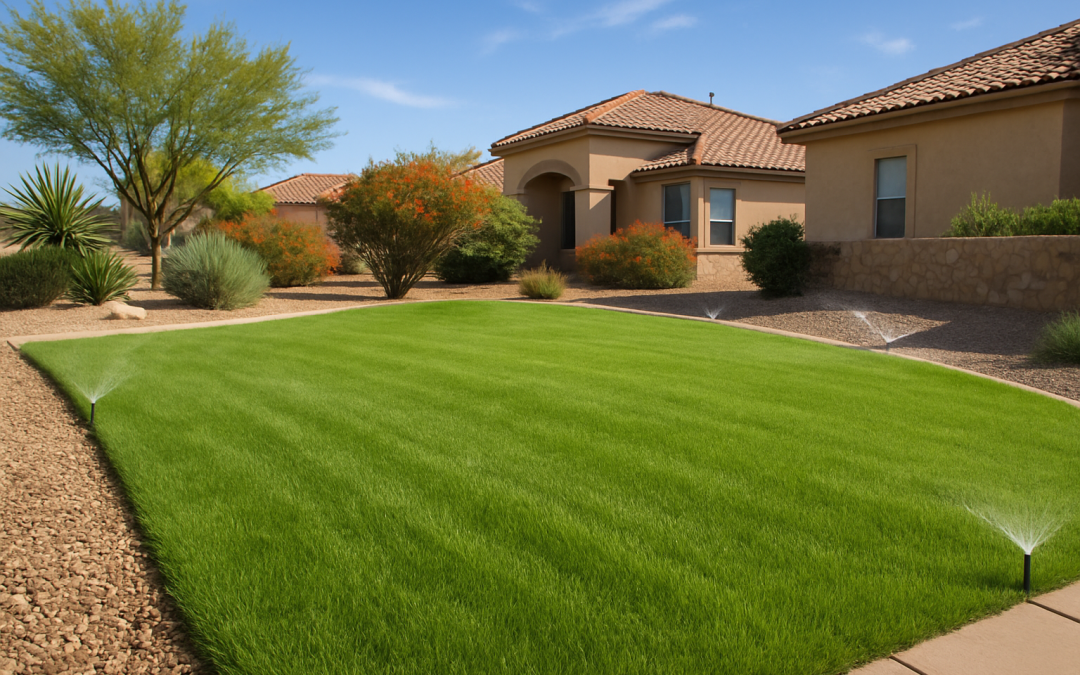
During the germination phase, plan on watering multiple short cycles per day. Many Las Vegas homeowners find that three to five brief sessions — each just long enough to wet the top quarter inch of soil — work well. The goal is not to soak the ground deeply; it’s to prevent the surface from drying out. Early morning, late morning, early afternoon, and late afternoon cycles are a common schedule. If you have an irrigation controller with multiple start times, this is the moment to use all of them.
Keep in mind that areas of your lawn exposed to full afternoon sun will dry out faster than shaded sections. Pay attention to south- and west-facing slopes, edges along driveways or sidewalks, and any spots where reflected heat from block walls or structures accelerates evaporation. These trouble zones are often where overseeding fails first.
Weeks Three and Four
Once you see a visible green haze of new seedlings across the lawn — typically around day seven to fourteen — you can begin tapering your watering frequency. Drop down to two or three sessions per day, gradually lengthening each run time slightly. The young ryegrass roots are starting to push deeper, and encouraging that downward growth with slightly less frequent but slightly longer irrigation helps build a more resilient stand.
By the end of the fourth week, most lawns can transition to once-daily or every-other-day watering, depending on temperatures and wind. If Las Vegas is experiencing one of those unseasonably warm stretches in late October or early November, stay on the more frequent side until things cool off.
A Note on Water Restrictions
Southern Nevada has specific watering schedules enforced by the local water authority. It’s worth checking your assigned watering days and making sure your overseed watering plan fits within those guidelines, especially since many of those rules include exceptions or temporary allowances for newly seeded lawns. A quick call to your water provider can clear up any confusion.
Mowing: When and How to Start
One of the most common questions homeowners have after overseeding is when to mow for the first time. The short answer: wait until the new ryegrass is at least two to three inches tall before making your first pass. Mowing too early can uproot tender seedlings that haven’t anchored yet.
When you do mow, set your mower height relatively high — around two to two and a half inches is generally a good starting point for perennial ryegrass in the low desert. Never remove more than one-third of the blade length in a single mowing. That means if you want to maintain the lawn at two inches, you should mow before it reaches three inches.
Use a sharp blade. A dull mower tears rather than cuts, and torn grass tips turn brown quickly in the dry desert air. If your mower hasn’t been serviced recently, now is a good time to sharpen or replace the blade.
Homeowners in Henderson and Boulder City who have established Bermuda lawns — whether Tifgreen 328 Bermuda or another variety — may have been mowing at a lower height during summer. Remember that overseeded ryegrass performs best at a taller mowing height than most Bermuda cultivars prefer during their active growing season.
Fertilization: Light and Steady
Perennial ryegrass benefits from a light feeding once it has established — typically around three to four weeks after germination. A balanced or slightly nitrogen-heavy fertilizer applied at a moderate rate generally works well. Avoid heavy applications; too much nitrogen at once can push rapid top growth at the expense of root development, and it can also burn tender young grass in the desert heat.
Many homeowners in the Las Vegas area find that a second light application about four to six weeks after the first keeps the ryegrass looking its best through the winter months. The key word is “light.” Overfeeding is a more common mistake than underfeeding.
If your underlying Bermuda lawn was established with a variety like Tifway II Bermuda, keep in mind that you’re feeding the ryegrass now, not the dormant Bermuda beneath it. The Bermuda will benefit from any residual nutrients when it wakes up in spring, but your primary concern this time of year is the ryegrass canopy.
Traffic and Use: Give It Time
It’s tempting to get back out on the lawn as soon as you see green, but try to minimize foot traffic for at least three to four weeks after overseeding. Young ryegrass seedlings are fragile. Walking on them, letting dogs run on them, or setting up furniture before they’ve had time to tiller and fill in can create bare or thin patches that are hard to fix later.
This is especially important in high-use areas like backyard play spaces and pathways between the house and a detached garage or casita. If you can redirect foot traffic temporarily — even with a simple rope barrier or stepping stones — you’ll be rewarded with a denser, more uniform stand.
By about week five or six, the ryegrass should be mature enough to handle normal residential use. At that point, you can resume regular activities and enjoy a green lawn through the winter.
Troubleshooting Common Post-Overseed Problems
Patchy Germination
If some areas are filling in nicely while others remain bare, the most likely culprit is uneven watering. Check your sprinkler coverage, especially at the edges of each zone. Dry spots near Pahrump or North Las Vegas properties with large lots and older irrigation systems are particularly common. Adjust heads, add temporary impact sprinklers, or hand-water problem areas until the seed catches up.
You can also re-seed bare spots with a light application of perennial ryegrass seed, lightly raking it into the existing surface. Keep the area moist and it should germinate within a week or so.
Yellowing New Growth
If the young ryegrass emerges green but then turns yellowish, it may be hungry. A light nitrogen feeding usually corrects the issue. It can also indicate overwatering — yes, even in the desert, it’s possible to keep the soil too wet once the grass has germinated. Standing water or soggy soil for extended periods can suffocate young roots. Dial back your watering frequency if the soil feels squishy underfoot.
Fungal Issues
While fungal diseases are less common in the dry Las Vegas climate than in humid regions, they can still appear during fall when overnight temperatures cool and irrigation keeps the surface moist. Pythium blight is the one to watch for — it shows up as greasy-looking patches that collapse quickly. Good air circulation, watering earlier in the day so the lawn dries before nightfall, and avoiding excessive nitrogen all help reduce the risk.
Tall Fescue Lawns: A Different Situation
Not every lawn in the Las Vegas valley is Bermuda. Some homeowners have established Trophy Plus Tall Fescue lawns. Tall Fescue is a cool-season grass that stays green year-round in most low desert conditions, so it typically doesn’t need to be overseeded with ryegrass. If your lawn is Tall Fescue, your fall care routine looks a bit different — focus on deep, infrequent watering, a light fall fertilization, and maintaining a mowing height of three to three and a half inches.
If you’re not sure whether your existing lawn is Bermuda or Tall Fescue, the blade width is the easiest clue. Bermuda has fine, narrow blades and spreads aggressively via runners. Tall Fescue has wider blades and grows in clumps. If your lawn goes dormant and turns brown in winter without overseeding, it’s almost certainly Bermuda.
Preparing for the Spring Transition
It might seem premature to think about spring when you’re still getting your fall overseed established, but it’s worth mentioning: the perennial ryegrass you’re nurturing now is a temporary guest. Come late spring, as temperatures climb back into the 90s and beyond, the ryegrass will naturally decline and the underlying Bermuda will wake up and take over.
A smooth spring transition depends in part on how well you manage the ryegrass through winter. Avoid letting it grow excessively thick with too much fertilizer, which can shade out the Bermuda and delay its spring green-up. A moderate, healthy stand of ryegrass is the goal — green and attractive, but not so dense that it smothers the permanent lawn beneath.
Next Steps for Your Lawn
Post-overseed care is straightforward once you understand the basics: keep the seedbed moist during germination, ease into a normal watering schedule as the ryegrass matures, mow high with a sharp blade, and go easy on the fertilizer. Whether you’re tending a backyard in Henderson or managing a large lot in North Las Vegas, these principles hold true across the valley.
If you’re looking to upgrade your permanent lawn or you’re planning a new sod project for next year, explore the full range of Bermuda and Tall Fescue varieties available through the SodShop Las Vegas location. And for questions about anything lawn-related, the SodShop team is always happy to help you figure out the best path forward for your yard.