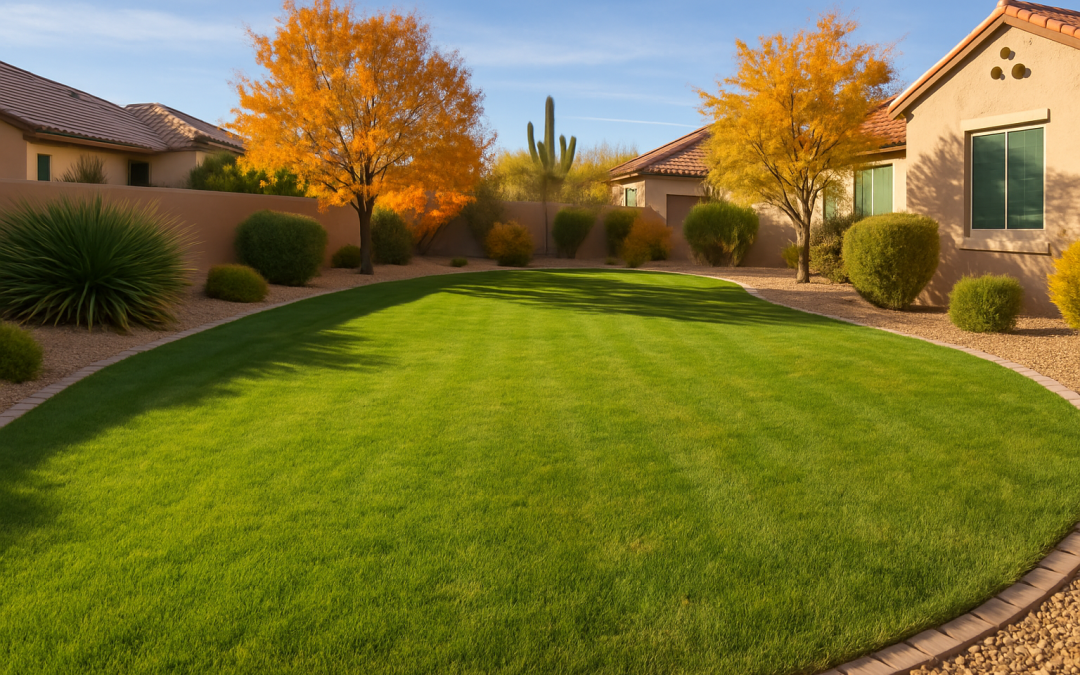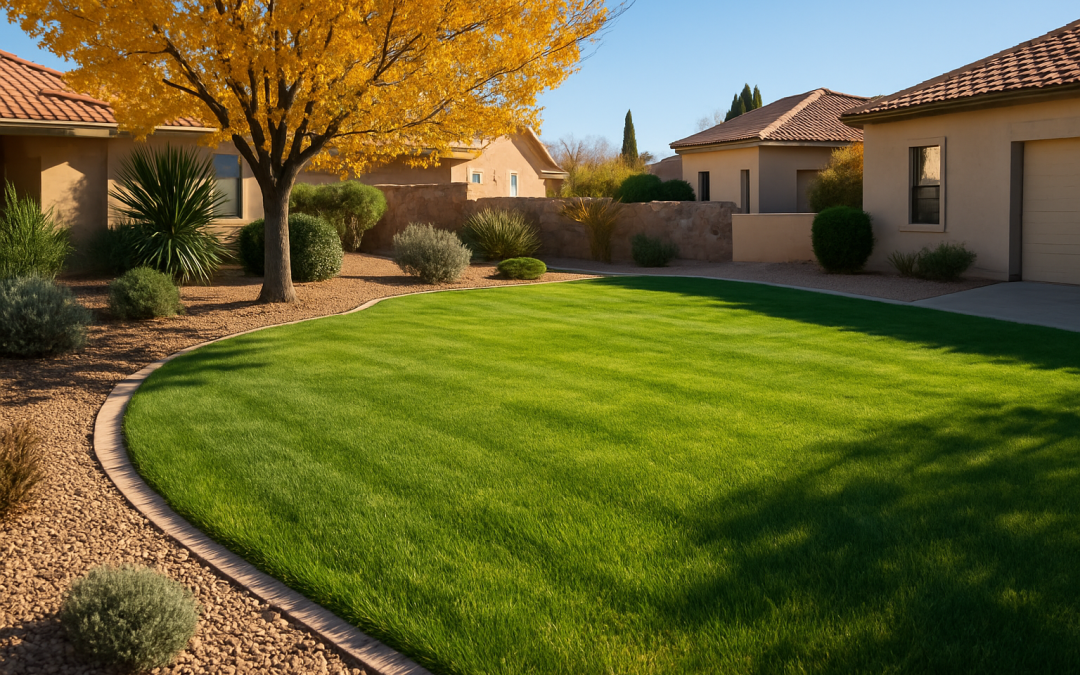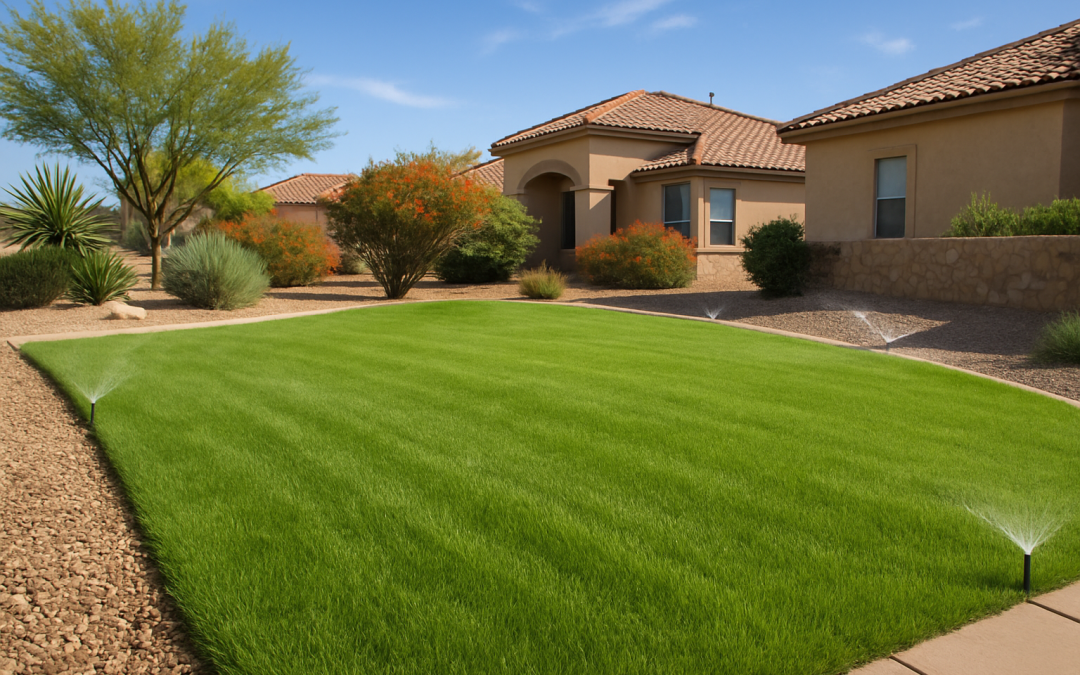
If you live in Tucson, you already know that warm-season lawns tend to go dormant once cooler weather settles in, leaving behind a stretch of straw-colored turf that can last well into spring. The good news is that overseeding with perennial ryegrass gives you a lush, green lawn all winter long. Getting the timing right, though, is everything—seed too early and the heat can scorch young seedlings, seed too late and germination slows to a crawl.
Why Tucson Homeowners Overseed in Fall
Bermuda and St. Augustine are the backbone of most southwestern lawns, and for good reason. They handle summer heat, tolerate the alkaline soils common across southern Arizona, and generally recover well from drought stress. But as nighttime temperatures start dipping below the mid-50s °F, these warm-season grasses begin to slow down and eventually enter dormancy. For many homeowners, a tan lawn from November through March feels like a long wait.
Perennial ryegrass fills that gap nicely. It germinates quickly, establishes a dense stand of bright-green blades, and thrives in the mild Tucson winter before naturally fading out as warm-season turf wakes up the following spring. The result is year-round color without replacing your permanent sod.
Nailing the Overseed Window
Timing is the single most important factor in a successful overseed, and in Tucson the window is typically narrower than many people expect.
Watch Soil Temperatures, Not the Calendar
The calendar can give you a rough guide—most Tucson homeowners overseed somewhere between mid-October and early November—but soil temperature is a far more reliable indicator. Perennial ryegrass germinates best when soil temps at the two-inch depth sit consistently between about 55 °F and 70 °F. Too warm and the seed may struggle to establish before the existing Bermuda or St. Augustine canopy shades it out; too cool and germination drags on, increasing the risk of birds, wind, or irrigation washing seed away before it can take hold.
A simple soil thermometer, available at most garden centers, takes the guesswork out of the equation. Check readings in the early morning for a couple of days in a row. Once you see a consistent reading within that sweet spot, you’re generally good to go.
How Tucson Differs From Mesa and Chandler
Because Tucson sits at a slightly higher elevation than the lower Sonoran Desert floor, fall temperatures can cool off a bit sooner than in cities like Mesa, AZ, or Chandler, AZ. That means the overseed window in Tucson may open a week or so earlier than it does for homeowners in the east Valley. If you have friends or family in those areas comparing notes, keep this elevation difference in mind—what works for a Mesa lawn in late October might be right for a Tucson lawn in mid-October, depending on that year’s weather pattern.
Preparing Your Warm-Season Base
A strong overseed starts with proper prep of the existing turf. Whether your lawn is Tifway 419 Bermuda, Midiron Bermuda, or Palmetto St. Augustine, the steps are similar.
Mow Low and Remove Debris
About a week before you plan to seed, gradually lower your mowing height. For Bermuda lawns, you can often bring the cutting height down to around half an inch to one inch—lower than you’d normally mow during the growing season. For St. Augustine, which doesn’t tolerate ultra-low mowing as well, aim for about one and a half to two inches. The goal is to open up the canopy so ryegrass seed can reach the soil surface and get good seed-to-soil contact.
Bag your clippings during these final pre-overseed mows, and rake or blow away any remaining thatch or leaf litter. A thin layer of thatch is normal, but a thick mat will keep seed from touching soil and reduce germination rates noticeably.
Aeration and Light Dethatching
If your lawn has a heavy thatch layer or compacted soil—common in Tucson’s clay-heavy caliche zones—consider core aerating before you overseed. Aeration pulls small plugs of soil out of the ground, creating channels for seed, water, and air. It’s especially helpful on Bermuda lawns that have been mowed aggressively all summer, since Bermuda’s vigorous stolons can build up a dense mat.
You can also do a light power raking or verticutting instead of full aeration. The idea is the same: open up the surface so seed can nestle into grooves and soil pockets rather than sitting on top of a thatch barrier.
Irrigation Check
Before seeding day, run each zone of your irrigation system and look for clogged heads, misaligned spray patterns, and dry spots. Newly seeded ryegrass needs consistent moisture to germinate—typically short, frequent waterings several times a day for the first week or two. If a sprinkler head is throwing water onto the sidewalk instead of the lawn, fixing it now saves you a patchy result later.
Seeding Day Step by Step
Once your lawn is prepped and the soil temperature is in range, it’s time to get seed on the ground. If you’d like a more detailed walkthrough of the mechanical steps, our guide on how to overseed your Chandler lawn step by step covers the process in depth and applies just as well to Tucson properties.
Spreading the Seed
Use a broadcast spreader for even coverage. Perennial ryegrass seeding rates for overseeding typically fall in the range of eight to twelve pounds per thousand square feet, though this can vary by cultivar. Spread half the seed walking in one direction, then spread the remaining half walking perpendicular to the first pass. This cross-hatch pattern helps prevent streaks and bare lines.
Topdressing
After spreading, a light topdressing of organic material or fine sand can help hold seed in place and improve seed-to-soil contact. Spread just enough to lightly dust the surface—no more than a quarter inch. You still want to see some seed peeking through. In Tucson’s dry air, this thin layer also helps retain a bit of moisture around the seed during the critical germination period.
Initial Watering
Immediately after seeding and topdressing, water the lawn thoroughly enough to moisten the top inch or so of soil. For the first seven to ten days, plan on running your irrigation in short cycles—roughly five to eight minutes per zone—three to four times a day. The surface should stay consistently damp but never puddled. As seedlings emerge and grow their first true leaves, you can gradually reduce watering frequency and increase the duration of each cycle to encourage deeper root development.
Caring for New Ryegrass Seedlings
Germination typically happens within five to ten days under good conditions, though you may see stragglers popping up for another week or two.
First Mow
Resist the urge to mow too soon. Wait until the new ryegrass is at least two to three inches tall, then mow with a sharp blade set at about one and a half to two inches. Dull blades can pull young seedlings right out of the ground, so sharpen your mower blade before that first cut.
Fertilizing
A light application of a balanced starter-type fertilizer around the time of seeding can give ryegrass a boost. Follow up with a second feeding roughly four to six weeks later as the lawn fills in. Tucson soils tend to be low in organic matter, so a slow-release nitrogen source generally works well. Avoid heavy nitrogen applications right at seeding, since too much can burn tender seedlings.
Ongoing Irrigation
Once the ryegrass is established—usually three to four weeks after germination—you can transition to a deeper, less frequent watering schedule. In Tucson’s mild winters, many homeowners find that watering every two to four days is sufficient, though this depends on sun exposure, wind, and whether your soil is sandy or clay-heavy. Keep an eye on the lawn’s color and soil moisture rather than relying on a rigid timer schedule.
Planning for Spring Transition
One thing that catches some homeowners off guard is the spring transition, when the permanent warm-season lawn starts waking up and the perennial ryegrass begins to decline. In Tucson, this typically happens somewhere between late March and mid-May, depending on how quickly temperatures climb.
The key to a smooth transition is gradually reducing water and fertilizer to the ryegrass as daytime highs start pushing into the upper 80s and low 90s. This stresses the ryegrass enough that it thins out, giving your Bermuda or St. Augustine room to fill back in. Lowering the mowing height slightly as spring progresses can also speed the process by letting more sunlight reach the warm-season stolons underneath.
If your warm-season lawn is a shade-tolerant variety like TifGrand Bermuda, keep in mind that shadier spots may transition a bit more slowly since the ryegrass tends to hang on longer where temperatures stay cooler. Be patient—the warm-season turf almost always reclaims the lawn once sustained heat arrives.
Common Mistakes to Avoid
A few pitfalls come up repeatedly when Tucson homeowners tackle their first overseed.
Seeding too early is probably the most common error. If daytime highs are still reaching the mid-90s, the existing warm-season grass is still actively growing and will compete aggressively with ryegrass seedlings. Meanwhile, the hot soil surface can dry out seed faster than your irrigation can keep up.
Skipping the prep work is another frequent misstep. Throwing seed over an unprepared lawn and hoping for the best usually results in thin, uneven coverage. The mowing, dethatching, and topdressing steps make a significant difference in how the overseed turns out.
Finally, overwatering after germination can lead to fungal issues, even in Tucson’s dry climate. Once seedlings are up and growing, back off the irrigation frequency and let the soil surface dry slightly between waterings.
Next Steps for Your Lawn
Fall is the ideal time to think about your Tucson lawn’s winter appearance, and getting the overseed timing right sets you up for months of green, healthy turf. If you’re also considering upgrading your permanent warm-season base before the next growing season, browse the full selection of Bermuda and St. Augustine varieties on the SodShop Phoenix and Tucson page to see what fits your yard’s sun exposure, water budget, and use. And if you have questions about anything from soil prep to seed selection, the team at SodShop is always happy to help you plan your project.