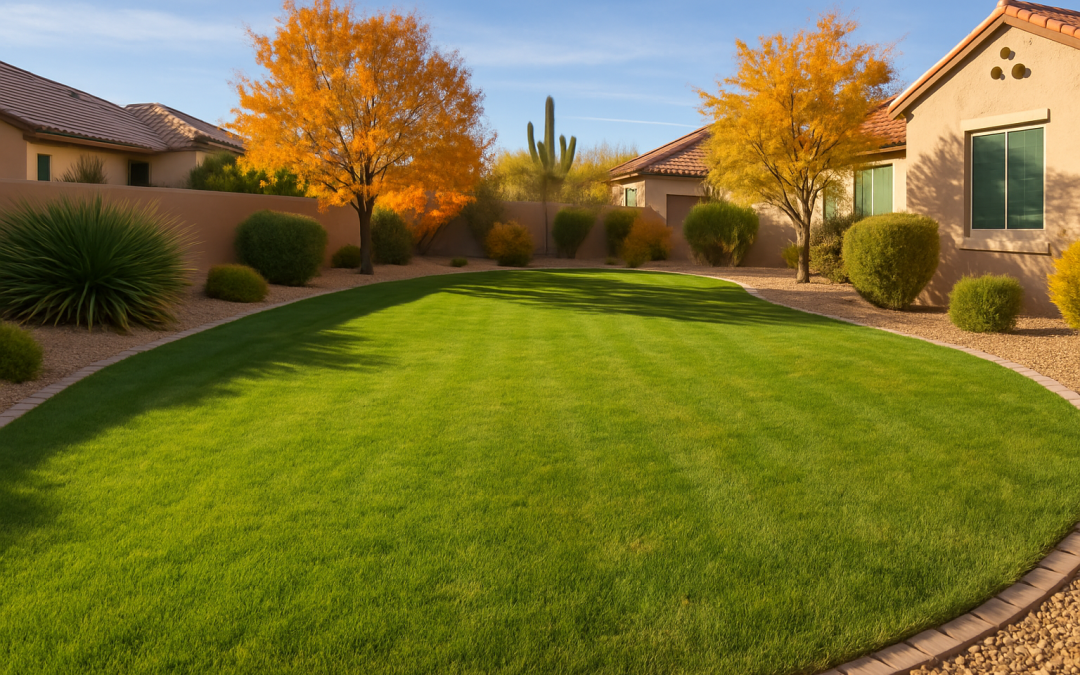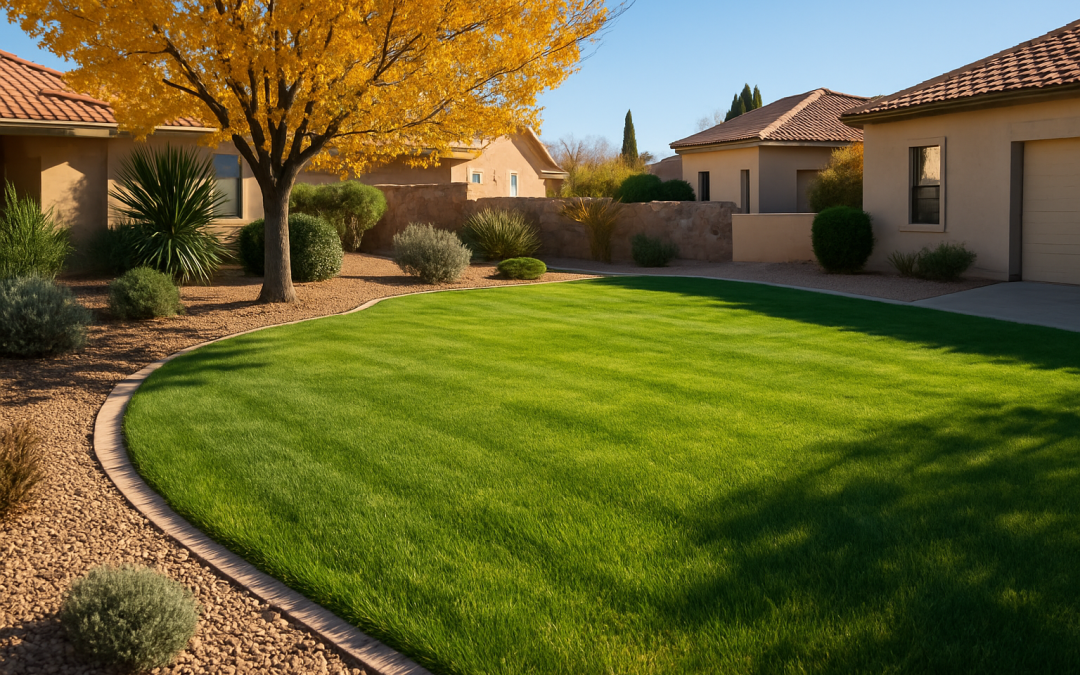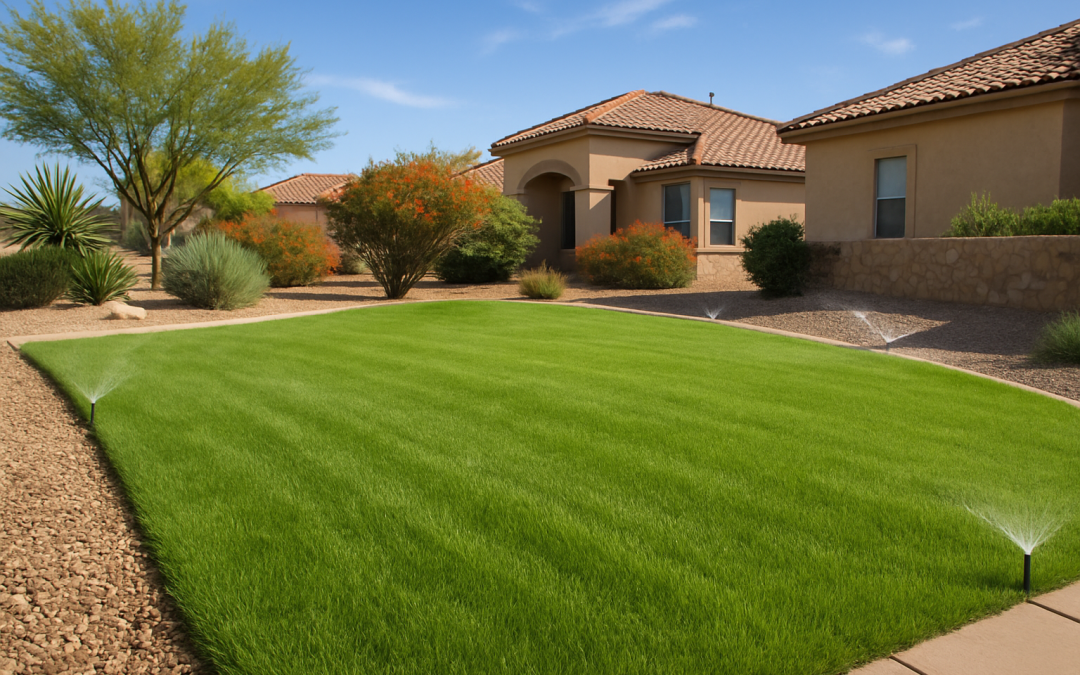
When the brutal Chandler summer finally loosens its grip and evening temperatures start dropping into the comfortable range, it’s time to think about one of the most rewarding fall lawn tasks in the low desert: overseeding. If you have a Bermuda or St. Augustine lawn — and most Chandler homeowners do — overseeding with perennial ryegrass is the tried-and-true way to keep your yard green through the cooler months while your warm-season turf goes dormant.
This guide walks you through the entire process from start to finish so you can enjoy a lush, vibrant lawn all winter long.
Why Overseeding Matters in the Low Desert
Bermuda and St. Augustine are excellent warm-season grasses for the Phoenix metro area, and for good reason — they handle the intense heat and sun that define life in Chandler, Mesa, Gilbert, and beyond. But once soil temperatures drop and daylight hours shorten, these grasses naturally enter dormancy. The result is a lawn that turns tan or straw-colored, which is perfectly normal but not exactly the green carpet most of us want to look at from November through March.
Overseeding with perennial ryegrass solves this. Ryegrass is a cool-season grass that germinates quickly, thrives in the mild desert winter, and then naturally fades away in late spring as your warm-season turf wakes back up. It’s a temporary guest that keeps your lawn looking its best during the off-season.
Homeowners across the East Valley — from Gilbert neighborhoods to busy corners of Mesa — rely on this annual cycle. It’s one of the defining rituals of fall lawn care in central Arizona.
Step 1: Get Your Timing Right
Timing is everything when it comes to overseeding in Chandler. You’re looking for a window when daytime highs have dropped from triple digits but are still warm enough to support germination, and when nighttime lows are consistently cool without being cold. In the greater Phoenix area, this window typically falls somewhere in October, though the exact timing shifts a little from year to year.
A good rule of thumb is to wait until daytime temperatures are generally in the mid-80s or lower and nighttime temps hover around the low 60s. Soil temperature matters too — perennial ryegrass tends to germinate well when soil temps are roughly in the mid-70s to low 80s at a depth of about two inches. If you seed too early while it’s still blazing hot, the seed can struggle or die. If you wait too long and it gets too cool, germination slows considerably.
When in doubt, err on the side of slightly later rather than too early. Many Chandler homeowners find that waiting until mid- to late October gives them the most reliable results.
Step 2: Prepare Your Existing Lawn
Preparing your warm-season lawn before you spread seed is arguably the most important step, and it’s also the one that gets skipped most often. Good seed-to-soil contact is critical. If your ryegrass seed just sits on top of a thick mat of Bermuda, germination will be spotty at best.
Mow Low
Start by mowing your existing lawn significantly shorter than usual. For Bermuda lawns — whether you’re growing a variety like Tifway 419 Bermuda, TifTuf Bermuda, or Midiron Bermuda — you’ll generally want to scalp the lawn down to about half an inch or so. The goal is to remove as much of the leaf canopy as possible so the ryegrass seed can reach the soil surface.
If you have a St. Augustine lawn, like Palmetto St. Augustine, the approach is a bit different. St. Augustine doesn’t recover from aggressive scalping the way Bermuda does, so many lawn-care professionals recommend simply mowing it a notch or two shorter than normal rather than cutting it to the ground. The trade-off is that overseeding results on St. Augustine tend to be less uniform, which is why most homeowners who overseed every year in the Phoenix metro tend to have Bermuda as their primary turf.
Dethatch and Clean Up
After mowing low, rake up or bag all the clippings and debris. If your lawn has a noticeable layer of thatch — that spongy mat of dead stems between the green blades and the soil — you’ll want to dethatch before seeding. A power dethatcher or vertical mower can be rented from most equipment rental locations around Phoenix and Mesa. Run it in at least two directions across the lawn for thorough coverage.
Once you’ve dethatched, rake and remove all the material that gets pulled up. You want to expose as much bare soil as possible.
Consider a Light Top Dressing
Some homeowners in the East Valley choose to spread a thin layer of top-dressing material — typically a fine compost or sand blend — after dethatching and before seeding. This can help improve seed-to-soil contact and give the germinating seedlings a soft, nutrient-rich bed to settle into. A layer of roughly a quarter-inch is generally plenty. This step is optional but can improve results, especially on lawns with compacted soil.
Step 3: Spread the Seed
For most residential lawns in the Chandler area, perennial ryegrass is the standard overseeding choice. It germinates quickly — typically within a week to ten days under good conditions — and it produces a fine-textured, dark-green lawn that looks great through the winter.
Seeding rates generally fall somewhere around eight to twelve pounds of seed per thousand square feet of lawn, though this can vary depending on the specific seed blend you choose and how thick you want the winter stand to be. A broadcast spreader is the easiest tool for the job. Make two passes — one in each direction — at half the total seeding rate per pass. This crisscross pattern helps ensure even coverage and reduces the chance of visible stripes or thin spots.
After spreading, lightly rake the seed into the soil surface or roll the lawn with a lightweight roller to press the seed down. The goal is gentle contact, not burial. Ryegrass seed doesn’t need to be deeply covered — just nestled against the soil.
Step 4: Water for Germination
This is where the real commitment begins. Newly seeded ryegrass needs consistent moisture to germinate, and in the dry Chandler climate, that means watering multiple times a day for the first week or two.
During the initial germination phase, aim to keep the top half-inch of soil consistently moist — not puddled, not flooded, just damp. For most lawns, this means three to four short watering cycles spread throughout the day. Early morning, late morning, early afternoon, and late afternoon is a common schedule. Each cycle only needs to run long enough to wet the surface — typically just a few minutes per zone, depending on your sprinkler system.
Once the seedlings emerge and are about an inch tall, you can begin reducing the frequency and increasing the depth of each watering. Transition gradually over the course of a week or so from frequent light waterings to deeper, less frequent sessions. By the time your ryegrass is established and you’ve mowed it once or twice, you should be on a normal cool-season watering schedule — generally every two to three days, depending on weather and soil type.
Water management during this phase is especially important in Gilbert and other East Valley communities where municipal water guidelines may influence your irrigation scheduling. Check your local watering schedule to make sure you’re in compliance.
Step 5: First Mow and Early Maintenance
You can typically give your new ryegrass its first mow once it reaches about two to two-and-a-half inches tall. Set your mower to cut at around one-and-a-half to two inches, and make sure your blades are sharp — dull blades tear young grass rather than cutting it cleanly, which can stress the seedlings and invite disease.
After the first mow, apply a light feeding with a balanced fertilizer to encourage the ryegrass to fill in and thicken up. Avoid heavy nitrogen applications early on, as pushing too much growth too fast can make the turf weak and prone to fungal issues. A moderate application every four to six weeks through the winter is generally enough to keep the lawn looking its best.
If you’re interested in more tips on keeping your overseeded lawn healthy once it’s established, the post on post-overseed care basics for Las Vegas low desert lawns covers many of the same principles that apply here in central Arizona.
Thinking About Your Underlying Warm-Season Turf
Overseeding is a seasonal practice layered on top of your permanent warm-season lawn, so the health and quality of that underlying turf matters a lot. A strong, dense Bermuda lawn generally produces the best overseeding results because the scalping and dethatching process is straightforward and the Bermuda bounces back vigorously in spring.
If your existing lawn is thin, patchy, or struggling, fall overseeding might mask the problem temporarily, but it won’t fix it. In that case, it may be worth thinking about the overall health of your warm-season base. Varieties like TifGrand Bermuda are popular in areas that get a mix of sun and shade — a common situation in established Chandler neighborhoods with mature trees. For full-sun areas, Tifway 419 and TifTuf are reliable workhorses that provide a dense, attractive base year after year.
You can browse the full selection of warm-season sod options available in the Phoenix metro at the SodShop Phoenix page.
The Spring Transition: Letting Go of Ryegrass
One thing worth mentioning — even though we’re focused on fall right now — is what happens in spring. As temperatures climb back into the upper 80s and 90s, your ryegrass will naturally begin to thin out and die off. At the same time, your Bermuda or St. Augustine will start greening up and growing again.
This transition period can be a little awkward-looking. Some homeowners help it along by gradually lowering the mowing height and reducing irrigation frequency in late spring to stress the ryegrass and give the warm-season turf a competitive advantage. Others simply let nature take its course. Either approach generally works fine, though actively managing the transition tends to produce a cleaner handoff.
The key is not to panic when you see the ryegrass start to fade. It’s supposed to do that. Your warm-season turf is waiting underneath, ready to take over for another summer.
Next Steps for Your Chandler Lawn
Overseeding is one of those fall tasks that pays dividends all winter — every time you look out the window or step outside, you’ll see green instead of dormant tan. With the right timing, good preparation, and consistent watering through germination, most Chandler homeowners find the process straightforward and the results well worth the effort.
If you’re thinking about overseeding this fall — or if your warm-season turf needs some attention before you seed — explore the sod varieties and resources available through SodShop. You can also visit the SodShop Phoenix page to see what’s available for your area and start planning your project. Here’s to a green winter lawn.