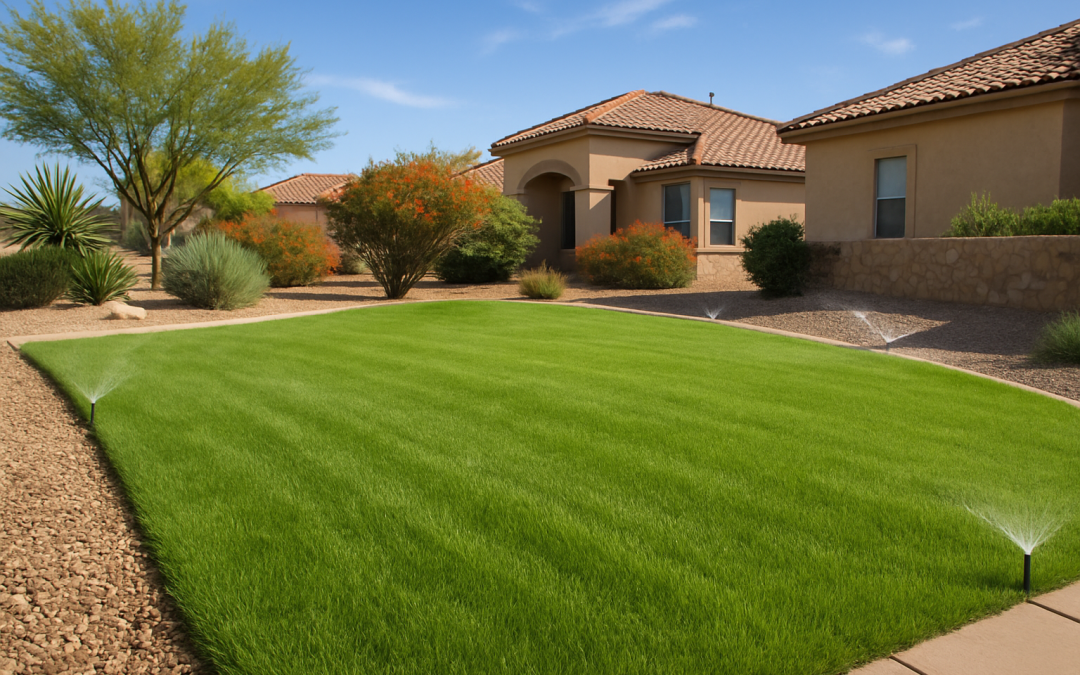
There’s a moment every fall in Phoenix when your dormant Bermuda lawn transforms from straw-brown to emerald green, and it feels like a small miracle. That moment arrives when your perennial ryegrass overseed germinates, pushes through the existing turf, and starts filling in. But germination is only the beginning—how you manage the next several weeks will determine whether you end up with a dense, carpet-like stand or a thin, patchy disappointment.
This guide walks you through the establishment phase of a newly overseeded lawn in the Phoenix metro, from the first tiny blades of ryegrass all the way to a mature winter lawn you’ll actually want to walk on barefoot.
Understanding What “Establishment” Really Means
Overseeding typically happens in mid-to-late October around the Valley, when nighttime temperatures start dipping into the mid-60s and below. Within a week or so of seeding, you should see the first flush of bright green ryegrass seedlings poking up. But those seedlings are fragile. Their root systems are shallow, their leaf blades are thin, and they’re competing with existing Bermuda crowns for light, water, and nutrients.
Establishment is the period between germination and the point at which the ryegrass canopy is thick enough to mow regularly at a normal height—generally three to four weeks after initial sprouting, though it can vary. During this window, your watering schedule, mowing habits, and fertility program all need to be tuned to the needs of young, tender grass rather than your established warm-season base.
If you’re looking for a detailed step-by-step guide on the overseeding process itself, our post on how to overseed your Chandler lawn covers soil prep, seeding rates, and timing in depth.
Dialing In Your Watering Schedule
Watering is the single most important factor during establishment, and it’s also the one homeowners across Mesa, Scottsdale, and the broader Valley tend to get wrong. The goal shifts dramatically as your ryegrass matures, so think of your irrigation in two distinct phases.
Phase One: Keeping Seeds and Seedlings Moist
From the time you seed until the ryegrass is about an inch tall, the soil surface needs to stay consistently moist—not soaked, but never allowed to dry out and crust over. In Phoenix’s fall climate, that typically means running short irrigation cycles two to four times per day, depending on your soil type and sun exposure. Each cycle might only be five to eight minutes on spray heads, just enough to dampen the top quarter-inch of soil.
Sandy soils common in parts of Gilbert and Chandler drain faster and may need more frequent, shorter pulses. Heavier clay soils hold moisture longer but can puddle if over-watered, which smothers seeds and encourages disease.
Phase Two: Training Roots to Go Deep
Once your ryegrass seedlings are clearly up and growing—typically an inch to an inch and a half tall—it’s time to start consolidating those frequent light waterings into fewer, deeper sessions. Gradually move toward watering once or twice a day, then every other day, increasing the run time so water penetrates several inches into the soil profile.
By the time you’ve mowed two or three times, your irrigation schedule should resemble a normal winter pattern: deep watering every two to four days, adjusted for temperature and rainfall. Overwatering at this stage is a common mistake. Phoenix winters are mild, and ryegrass doesn’t need as much moisture as you might think once it’s rooted in. Soggy soil invites fungal issues and weakens the Bermuda base underneath.
Mowing: Start Early, Mow Light
Many homeowners hesitate to mow newly overseeded turf, worried they’ll rip out the young seedlings. That caution is understandable, but waiting too long to mow is actually a bigger problem than starting a little early.
When to Make the First Cut
Plan your first mow when the ryegrass reaches about two inches in height. At that point, the seedlings have generally developed enough root structure to withstand a mower. Set your mower height to about one and a half to two inches—you want to remove roughly the top third of the blade, not scalp it down.
Use a sharp blade. Dull mower blades tear rather than cut, which stresses young grass and leaves ragged tips that brown out. If your mower hasn’t been serviced since summer, now is a great time to sharpen or replace the blade.
Mowing Frequency During Establishment
Ryegrass grows quickly in Phoenix’s mild fall temperatures, and frequent, light mowing is one of the best things you can do to encourage a thick stand. Mowing every four to five days during the peak establishment period helps the grass tiller—that is, send out side shoots that fill in bare spots. Letting ryegrass get too tall between mowings forces you to remove too much leaf tissue at once, which shocks the plant and slows lateral growth.
As fall progresses and growth rates slow with cooler temperatures, you can gradually extend mowing intervals to once a week or so. But during those first few critical weeks, resist the urge to let it grow long between cuts.
Fertility: A Little Goes a Long Way
Your Bermuda base—whether it’s a variety like Tifway 419 Bermuda or a tough performer like TifTuf Bermuda—is heading into dormancy, so it doesn’t need much nutrition right now. The ryegrass, on the other hand, is hungry.
A light application of a balanced or nitrogen-leaning fertilizer about two to three weeks after germination gives the ryegrass the boost it needs to fill in. Many homeowners in the Phoenix area find that a slow-release granular product works well, since it feeds steadily over several weeks without the risk of a single heavy dose burning tender seedlings.
Avoid over-fertilizing. Pushing too much nitrogen can cause the ryegrass to grow excessively fast, which sounds good but actually creates a weak, floppy canopy that’s more prone to disease. A moderate, steady supply of nutrients produces a denser, more resilient stand.
You can follow up with another light feeding in mid-winter if the color starts to fade, but most Phoenix-area lawns do well with just one or two supplemental applications between October and March.
Managing Traffic and Wear
This is the part nobody wants to hear: try to stay off the lawn as much as possible during the first two to three weeks of establishment. Young ryegrass seedlings are easily damaged by foot traffic, pet activity, and anything heavy sitting on the turf. The root systems simply aren’t strong enough yet to bounce back from compaction and abrasion.
If you have kids or dogs—and let’s be honest, most of us do—consider sectioning off the overseeded area or at least keeping high-traffic patterns to a minimum. Once the ryegrass has been mowed a few times and the canopy has thickened, it becomes remarkably resilient to normal residential use. You just need to give it a fair start.
Troubleshooting Common Establishment Issues
Thin or Patchy Areas
If parts of your lawn come in thick and others are sparse, the most common culprit is uneven seed distribution or inconsistent irrigation coverage. Check your sprinkler heads for dry spots, and consider overseeding bare patches with a light second application of ryegrass seed. Lightly rake the seed into the soil surface and keep it moist, just as you did during the initial seeding.
Yellowing Seedlings
Young ryegrass that turns pale or yellowish is often signaling a nitrogen deficiency. A light dose of quick-release fertilizer can green it up within a few days. However, yellowing can also indicate overwatering, so check your soil moisture before reaching for the fertilizer bag.
Damping Off and Fungal Issues
Phoenix’s dry climate generally works in your favor when it comes to disease, but overwatering during establishment can create the conditions fungi love. If you notice seedlings wilting and collapsing at the soil line, you may be dealing with damping off. The best remedy is usually to back off the irrigation and improve air circulation by mowing regularly.
Thinking Ahead: Your Bermuda Base Matters
A successful overseed starts with a healthy warm-season base, and that’s something to keep in mind year-round. Strong, well-maintained Bermuda turf provides the foundation for a smooth overseed transition in fall and an equally smooth transition back to warm-season growth in spring.
If your existing Bermuda lawn is thin, weedy, or struggling, the fall overseed may mask those issues temporarily, but they’ll resurface come April. Homeowners across Scottsdale, Mesa, and beyond sometimes find that the best long-term investment is replacing a tired lawn with fresh Bermuda sod—varieties like Midiron Bermuda are well-suited to the Valley’s heat and alkaline soils. A strong Bermuda base not only performs better in summer but also accepts ryegrass overseed more successfully each fall.
For those with shadier landscapes, TifGrand Bermuda tends to handle reduced sunlight better than most Bermuda varieties, which can be a real advantage under the mesquite and palo verde canopies common in Phoenix-area yards.
Enjoying the Payoff
Once your overseeded lawn is established—typically by mid-to-late November in Phoenix—you get to enjoy one of the real perks of desert living: a lush, green lawn through the mildest, most pleasant months of the year. Maintain it with regular mowing, moderate watering, and an occasional light feeding, and your winter lawn will carry you all the way through to spring.
When March and April roll around, you’ll face the reverse transition—letting the ryegrass fade as your Bermuda base wakes up. But that’s a topic for another season.
Next Steps for Your Lawn
Whether you’re nursing a newly overseeded lawn through its first few weeks or planning ahead for next year’s sod and overseed project, SodShop is here to help homeowners throughout the Phoenix metro. Browse our full selection of Bermuda and St. Augustine sod varieties on our Phoenix location page, and don’t hesitate to reach out through our contact page if you have questions about which turf is the right fit for your yard. A great winter lawn starts with a great warm-season foundation—and a little patience during those first critical weeks of establishment.